
The Premier Aviator Game Provider and Authorized Spribe API Aggregator!
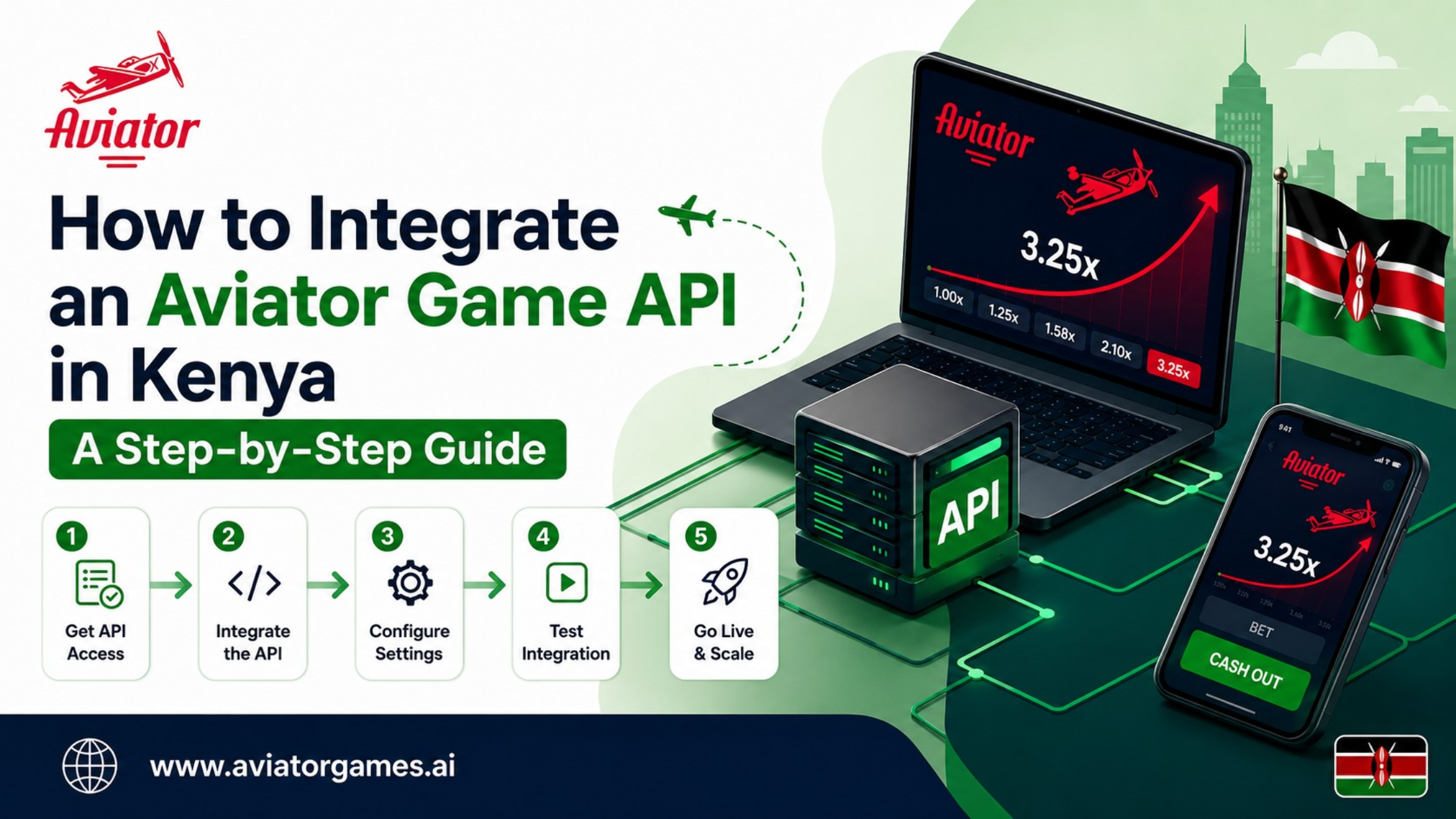
Integrating an Aviator-style game into an online gaming platform can sound complicated, especially if you are doing it for the first time. In reality, the process becomes much easier when it is divided into clear technical steps.
An Aviator Game API Kenya solution allows a gaming platform to connect with an external game service through an API instead of developing every game-related function from the ground up. The exact API functions, integration method, and commercial terms depend on the provider.
This guide explains the process from choosing an API provider to testing and launching the integration, so developers and operators can understand what is involved before starting a project.
An Aviator Game API is a software interface that allows a gaming platform to communicate with an external Aviator-style game service.
In simple terms, the API acts as a bridge between the platform and the game system. Depending on the provider, it may support functions such as game sessions, authentication, game results, player-related information, wallet communication, and transaction-related operations.
For a Kenyan gaming platform, an Aviator Game API Kenya integration should be selected according to the platform's technical architecture, security requirements, expected traffic, and applicable local requirements.
The first step is finding an API provider that fits your project.
Do not choose a provider only because it offers a low price. Look at the complete service, including:
A provider with clear documentation and responsive technical support can make the development process much smoother.
Once you have selected a provider, the next step is to understand its documentation.
API documentation normally explains how your platform communicates with the API. Depending on the provider, it may include:
Developers should read this information before writing integration code. It helps the team understand exactly what the API expects and what information it returns.
After reviewing the service, contact the provider to request access.
The provider may ask for information about your platform, business, technical requirements, and intended market.
For example, you may need to provide:
Once the onboarding process is completed, the provider can provide the appropriate API access details.
API credentials allow your backend to authenticate with the API.
Depending on the provider, these may include:
These credentials should be treated as sensitive information. Developers should store them securely on the server and avoid exposing them in frontend code.
The next stage is the actual technical integration.
A simplified connection can look like:
Player → Gaming Platform → Backend → Aviator API → Game Service → Response
The backend sends an authenticated request to the API and processes the response before returning the appropriate information to the gaming platform.
The exact implementation depends on the API documentation and the technology used by your platform.
For this reason, developers should avoid copying integration code from unrelated providers. Each API has its own endpoints, authentication methods, parameters, and response structures.
Not every platform needs exactly the same API functions.
Depending on the provider and platform architecture, developers may need to integrate functions related to:
The platform may need to create or manage a player's game session.
The API needs to verify that requests are coming from an authorized platform.
The platform may need to receive relevant game information from the API.
If supported, the API may return game results or round information to the platform.
Where supported, wallet-related communication may need to be connected securely with the gaming platform.
The provider's documentation should be treated as the source of truth for the exact available endpoints and functions.
Testing is one of the most important parts of an Aviator Game API Kenya integration.
If the provider offers a sandbox or test environment, developers should use it before moving to production.
Test areas can include:
Testing gives developers an opportunity to identify problems before real users interact with the system.
Security should not be treated as a final step. It should be considered throughout the integration.
Developers should review:
For online gambling platforms in Kenya, current regulatory requirements should also be considered. The 2026 Gambling Control regulations include requirements around player data security, platform resilience, system integration, and game fairness.
A platform may work correctly with a few test users but behave differently when traffic increases.
Before launch, developers should consider:
Ask the API provider about its infrastructure and limitations so your development team can plan accordingly.
After the integration has passed technical and security testing, the production environment can be configured.
This normally involves:
It is a good idea to monitor the integration closely during the initial production period.
For businesses searching for an Aviator Game API Kenya solution, AviatorGames.ai provides Aviator API services and API integration for online gaming platforms. Its website describes the service as an Aviator API provider and authorized Spribe API aggregator, with API integration and gaming platform services.
Before starting an integration, businesses should review the provider's current API documentation, available functions, authentication process, testing options, pricing, and technical requirements.
A provider's existing integration experience can also be useful when developers need assistance during implementation or troubleshooting.
Technical integration is only one part of launching an online gaming platform in Kenya.
The Gambling Regulatory Authority of Kenya states that it regulates, supervises, and controls gambling activities in the country, including online gambling platforms.
The current Gambling Control Act requires persons wishing to operate, sell, or promote online gambling in Kenya to apply for the relevant licence from the Authority.
Therefore, operators should review the latest licensing and technical requirements before launching. API integration itself does not replace the operator's regulatory responsibilities.
A few simple mistakes can create unnecessary problems during integration.
Always review the documentation before committing to a provider.
Never place private API keys or tokens in publicly accessible frontend code.
Moving directly to production without proper testing can lead to avoidable errors.
Consider future traffic instead of designing only for your current user base.
The cheapest API may not provide the documentation, support, security, or scalability your platform needs.
Integrating an Aviator Game API Kenya solution does not have to be overwhelming when the project is approached step by step.
Start by choosing a suitable provider, review its documentation, request API access, configure authentication, connect the backend, integrate the required functions, and thoroughly test everything before going live.
Security, scalability, technical support, and Kenyan regulatory requirements should also be part of the planning process.
For operators and developers exploring an Aviator Game API Kenya solution, AviatorGames.ai can be evaluated based on its API integration services and the requirements of your platform.
The most important goal is not simply to integrate an API quickly, but to build a stable and properly tested connection that fits your platform.
An Aviator Game API is a software interface that allows a gaming platform to communicate with an external Aviator-style game service.
The timeline depends on the API, platform architecture, required features, documentation, testing requirements, and development resources. A simple integration may take less time than a customized platform integration.
You generally need API access, credentials, technical documentation, a compatible backend, development resources, and a suitable testing environment.
API availability depends on the provider and its commercial and technical terms. Businesses should confirm current availability, integration requirements, and applicable Kenyan regulatory obligations directly with the provider and relevant authorities.